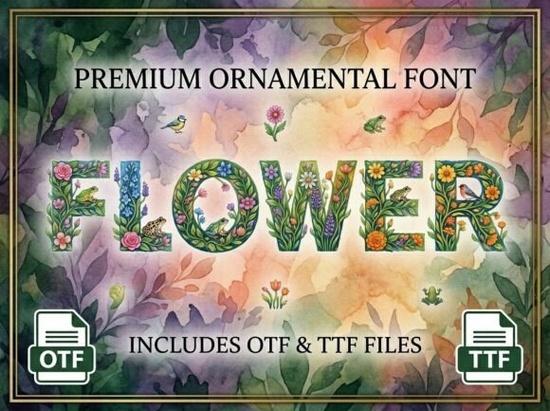
If you're looking for a decorative font that stands out without feeling fussy, the Flower Font is worth your attention. It’s not a subtle background player it’s made for moments where typography needs to carry weight and charm: a boutique logo, a hand-poured candle label, or a wedding invitation header. Unlike many floral-themed fonts that lean heavily into script or dainty serifs, this one balances botanical inspiration with clean, confident letterforms. And yes it’s uppercase only, so it works best where impact matters more than body text.
Who actually uses this kind of font?
Designers building brand identities for small businesses especially in wellness, floristry, or handmade goods often reach for display fonts like this when they need something memorable but still legible at scale. Print-on-demand sellers use it for limited-run apparel graphics (think “BLOOM” across a linen tote) or sticker sheets where each letter feels intentional. Crafters layer it into digital scrapbooking kits or Cricut projects because the OpenType features hold up well in cutting software. Even educators making classroom posters or seasonal bulletin boards find it refreshingly different from overused script fonts.
What’s included and what’s not
You’ll get two file formats:
- An OTF file, ideal if you’re using Adobe Illustrator, InDesign, or Affinity Designer especially for accessing stylistic alternates or ligatures (if available in the version you purchase).
- A TTF file, which opens reliably in Canva, Cricut Design Space, Silhouette Studio, and most free or budget-friendly tools.
Keep in mind: this is an all-caps display font. There are no lowercase letters, numbers, or punctuation beyond basic symbols. That’s intentional not a limitation. It means every capital letter is designed to shine on its own, with subtle petal-like curves and balanced negative space. If you need full character sets for long paragraphs or multilingual support, this isn’t the right choice. But for short, expressive phrases? It delivers.
How does it compare to similar options?
It shares visual warmth with fonts like the kawaii-smile-font, but trades cartoonish playfulness for refined elegance. Compared to the rose-font, it feels less romantic and more contemporary less lace, more line art. And while the flower-font-decorative-fonts category includes dozens of options, this one stands out for how evenly spaced and consistently weighted the letters feel across sizes. That makes it easier to pair with simpler sans-serifs (like Montserrat or Poppins) without clashing.
Where does it work best and where might it fall short?
Works well for:
- Logo lockups where the business name is short (e.g., “LUNA BOTANICA”, “WILLOW & CO.”)
- Packaging for artisanal products soap labels, tea tins, greeting cards
- Digital assets like Instagram story templates or Pinterest quote graphics
- Vinyl decals, heat-transfer designs, or sublimation prints
Less ideal for:
- Long headlines with more than 4–5 words (spacing can feel tight at smaller sizes)
- Brands aiming for strict minimalism or high-tech aesthetics
- Projects requiring multilingual support (no extended Latin characters or diacritics)
A quick note on licensing
The standard license covers personal use and commercial projects including selling physical items (like mugs or shirts) with the font used in static designs. You can’t resell the font files themselves or embed them in apps or SaaS platforms. If you’re running a design studio and plan to use it across multiple client projects, double-check the license terms before purchasing some Creative Fabrica fonts offer extended options.
If you’ve tried other floral display fonts and found them too fragile or overly ornate, the rose-font-decorative-fonts collection might be worth browsing next but keep in mind that the Flower Font leans slightly more structured and versatile. For crafters who value consistency across mediums and designers who want personality without sacrificing polish it’s a practical, repeatable tool.
Before downloading: Open your design app first, install the OTF or TTF file, then test it with a short phrase at three sizes (12pt, 48pt, 120pt). Check spacing, kerning, and how it renders on screen vs. print preview. If it holds up cleanly across all three, you’ve likely got a keeper.
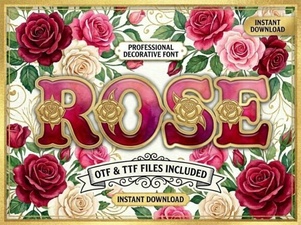 Rose Font: Elegant Typography for Creative Projects
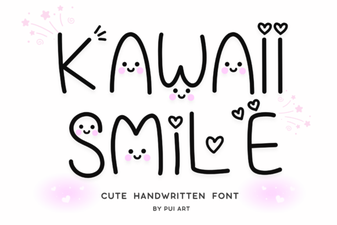 Kawaii Smile Font: Playful Design Ideas & Uses
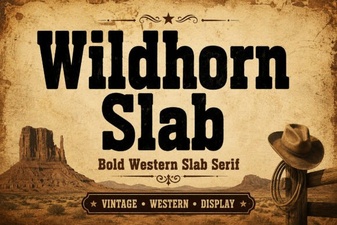 Wildhorn Slab: Bold, Versatile Font for Creative Projects
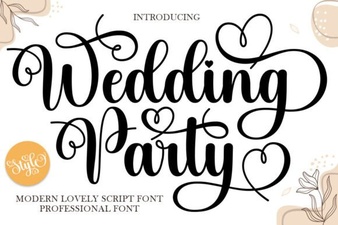 Elegant Wedding Party Fonts for Your Big Day
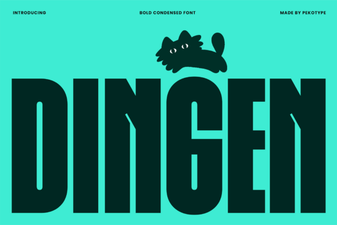 Dingen Font: Creative & Versatile Design Tool
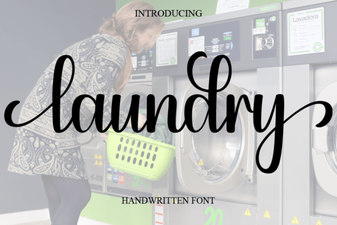 Laundry Font: Creative Design Ideas for Clean Typography